#18 Diversity of Indian food
We have always been awe-struck by how diverse Indian food is - not only does it vary substantially from state to state (there are 28 states!) but there is tremendous variety and variability even within a state across its different regions and also between its different religious adherents. And when we say diverse, we mean really diverse - Bengali food is so vastly different from Goan food or food from Kerala, or from Kashmir. It is even more incredible that despite these vast differences in taste and presentation, there is a common soul that binds all these different foods. You can never mistake Indian food for food from any other part of the world and can always tell it is Indian. Isn’t this amazing?!
On our nearly 4-month trip to India earlier in the year, we were fortunate to have experienced some more amazing food, some of which we had previously never even heard of and some that we had not had a chance to sample. This includes:
Baltohi (or baltoi) mutton - a specialty of the town of Bilaspur in Himachal Pradesh, where mutton is cooked in the eponymous baltohi, a vessel made typically from copper and featuring a broad belly and a narrow mouth designed to trap steam and maintain heat; the cooking is done outdoors over a long trench fueled by pinewood to achieve a distinct slow-simmered flavor
The Dham food of Himachal, a traditional, multi-course vegetarian feast rooted in ancient temple traditions, and slow-cooked by hereditary chefs without using any onions, garlic, or tomatoes. We tried the Kangri dham, the Mandiyali dham and the Chambayali dham, each from the respective valleys of Himachal, in a lovely little cafe run entirely by local women near Bir in the company of Reena and Samir and were blown away by the awesome flavors
The incredibly delicious food that Rashmi and Vikram fed us in Coorg, featuring the star pandi (pork) curry characterized by the use of kachampuli (a dark, tart vinegar made from local panapuli fruit) and a blend of roasted spices, and also other lesser known (at least to us) delicacies (e.g. Coorgi egg curry) and accompaniments such as kadambuttu, noolputtu, paaputtu, and akki rotti (rotis made from rice flour)
Cuisine of Kerala’s Moplah Muslims (an amalgam of Arab, Persian, Portuguese and local Malabari flavors) that Sridhar’s friend Naaz so kindly made for us after we unabashedly invited ourselves to her place
The long list of Gujarati delicacies that Falguni curated for us and systematically had us sample, most of which we had no idea existed
The mind-blowing 14-course meal we had at the NAAR featuring haute cuisine made almost entirely using recipes and ingredients from the various parts of the Himalayan belt. Here is a photo blog of the experience
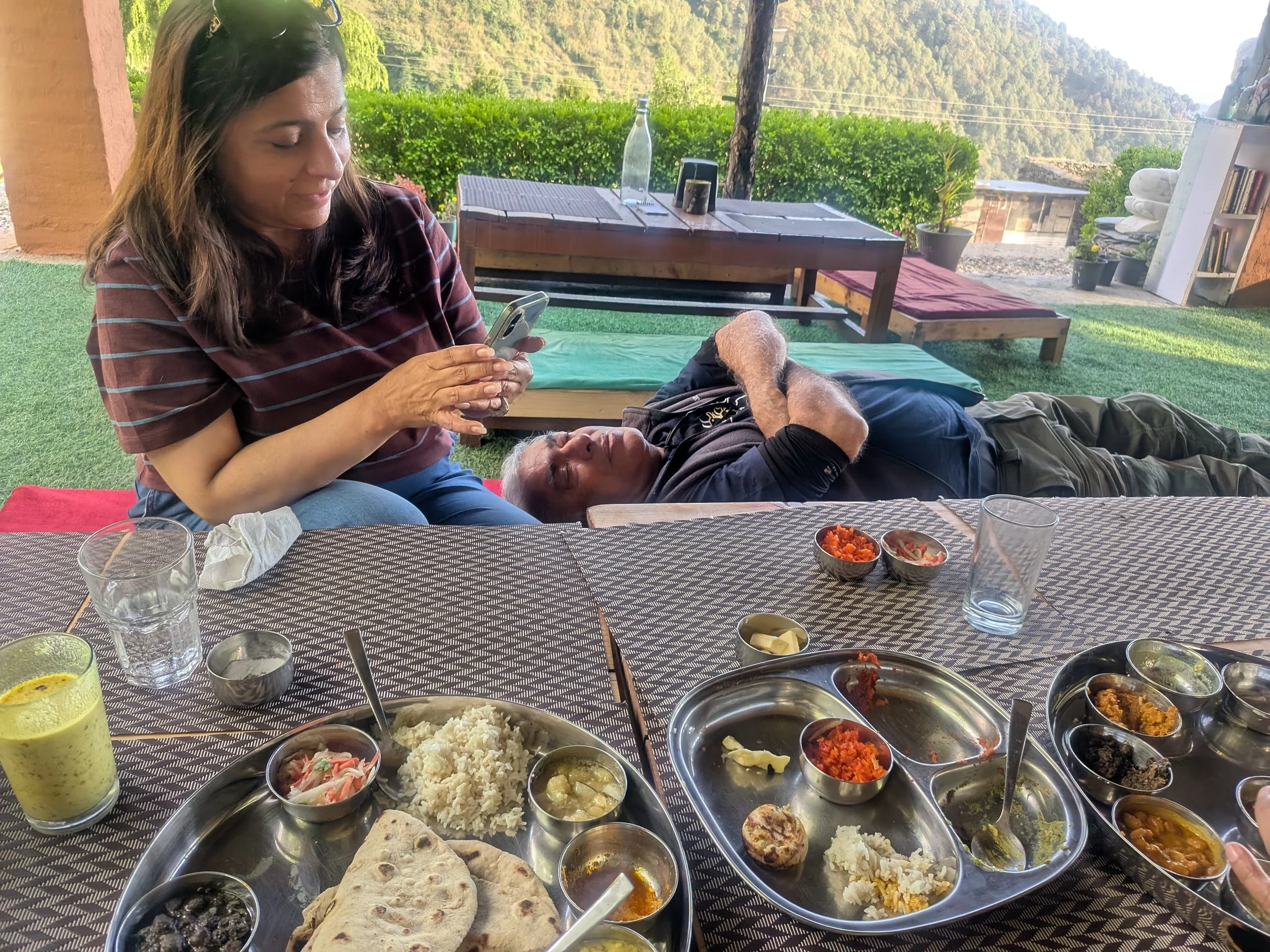
The dham platters we tried near Bir, Himachal Pradesh (inducing post-prandial stupor in some!)
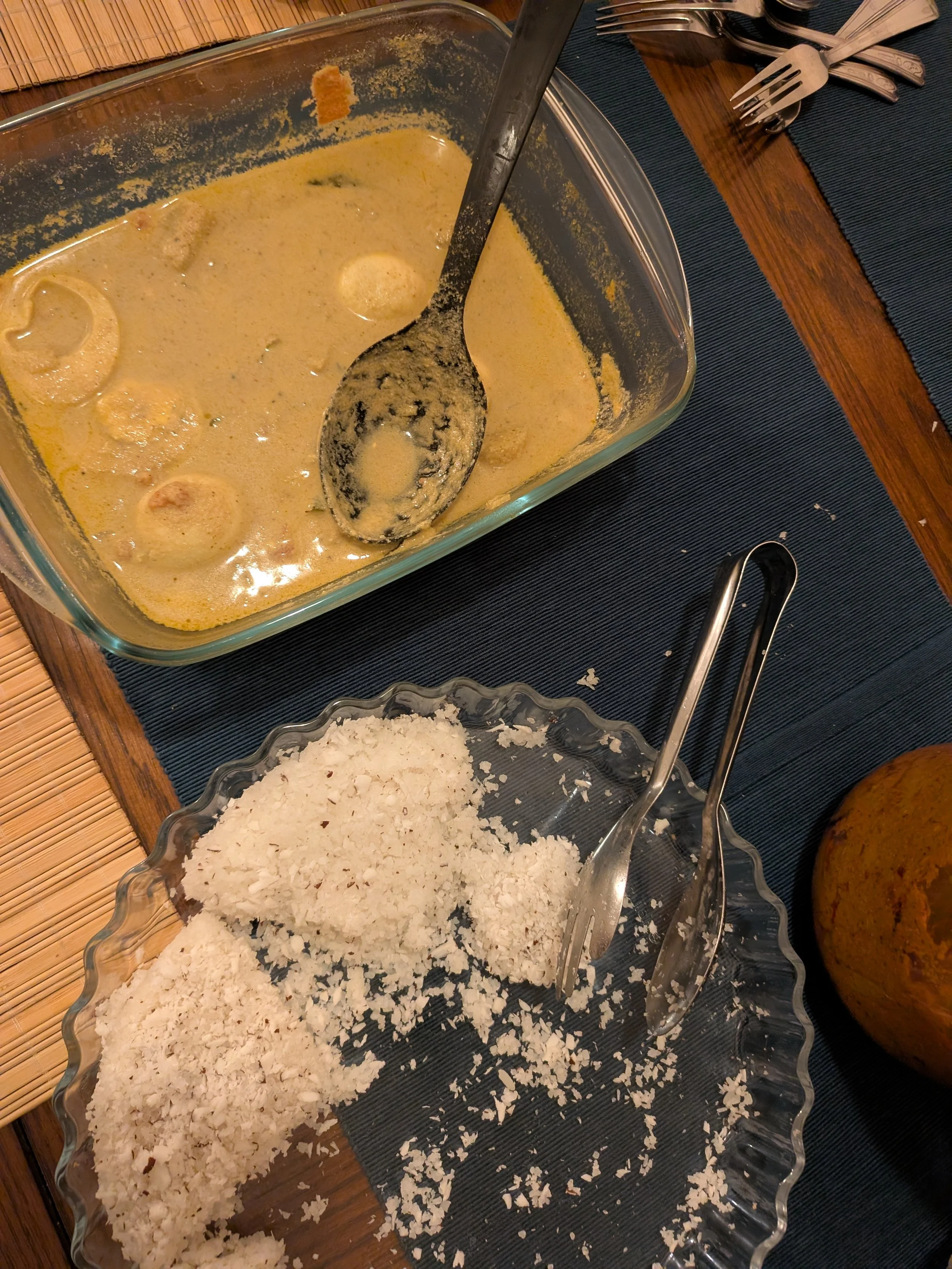
Egg curry with paaputtu, one of the Coorgi specialties
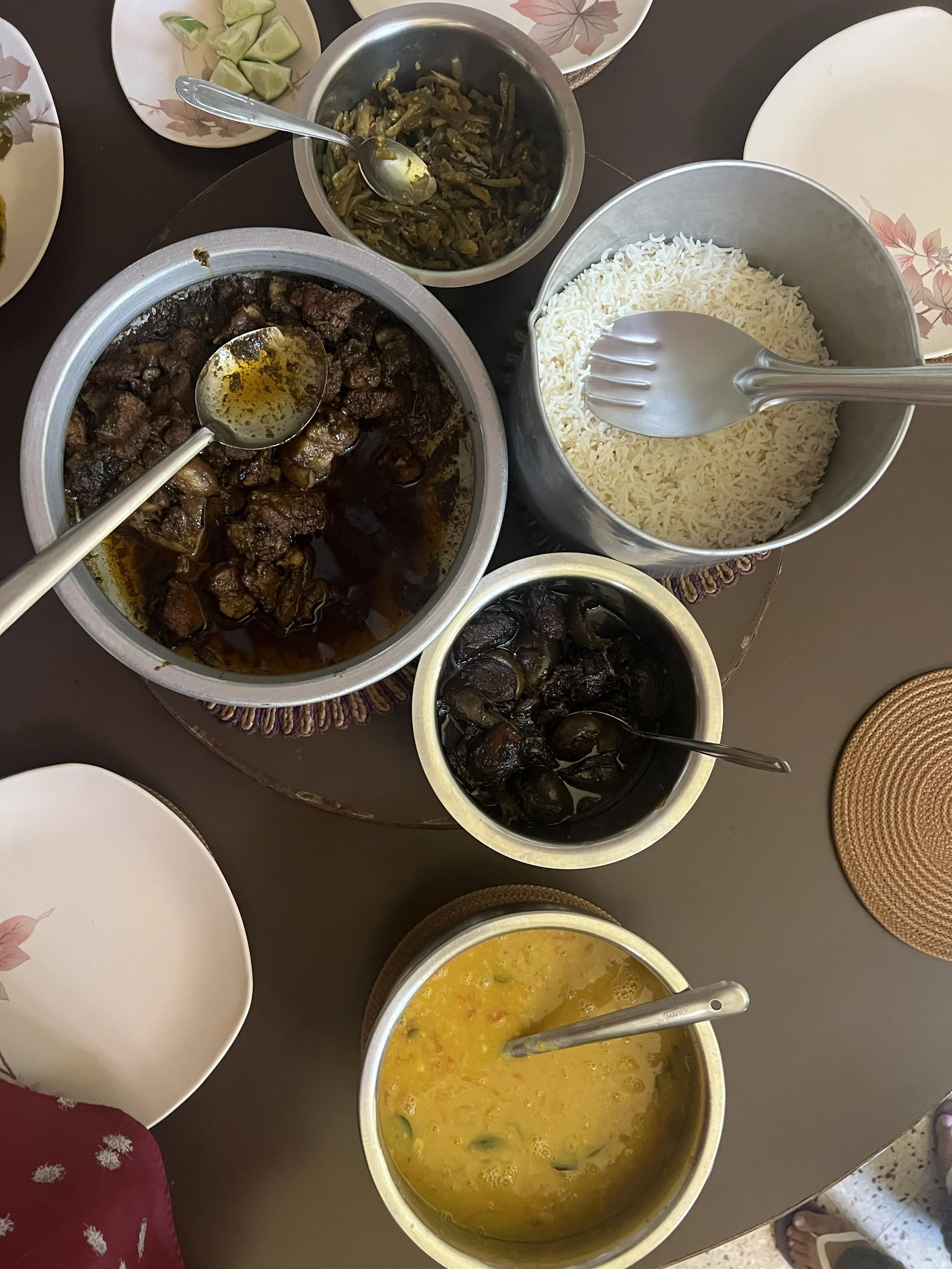
The famed Pandi curry, the lead act, along with a host of sidestars at a Coorgi food concert!
There are still large swathes of India whose cuisines we have not experienced - the north-East, mid-East (Jharkhand, Chhattisgarh) but hopefully soon we will, but one thing is for sure, the diversity of Indian food will never cease to surprise us!
